






Why Nature Doesn't Waste Anything, And What We Can Learn From It
This time of year can feel like an ending, when the forest floor is covered with fallen leaves, decaying wood and other natural debris. But what looks like a finale to humans is actually an ecosystem’s next act. That’s because in nature, very little goes to waste – and the cycle never ends. Who are some of the hardest-working organisms behind this transformation? You guessed it: Fungi.
As we settle into a season of gratitude and abundance, the fungal kingdom offers some timely lessons about making the most of what we have.
Meet nature's ultimate recyclers
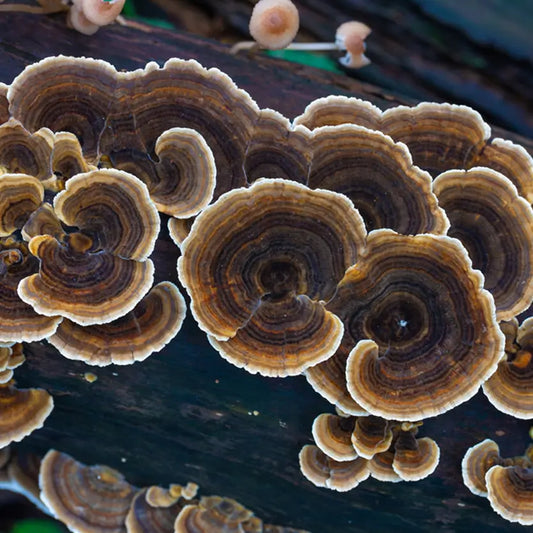
Imagine a forest without fungi. All those fallen trees and dead leaves would pile up and take a lot longer to break down, and many nutrients would remain locked away instead of returning to the soil. That's because fungi are some of the most important decomposers in nature.
Plants use sunlight to produce energy, but fungi get their nutrients by breaking down organic materials. Many species release specialized enzymes into their surroundings, helping break down complex substances such as cellulose (aka fiber) and lignin found in wood and plant matter.
As fungi and other decomposers do their recycling work, nutrients are released and become available to other organisms. That’s how a fallen tree can eventually help nourish new trees.
The hidden connections beneath our feet
Fungi also form symbiotic partnerships with living plants. These partnerships are widespread in terrestrial ecosystems and play important roles in forest health. Mycorrhizal fungi establish relationships with plant roots, helping plants access water and nutrients such as phosphorus and nitrogen. In exchange, plants provide the fungi with sugars produced through photosynthesis.
Some mycorrhizal fungi also connect the roots of multiple plants through underground networks, sometimes called the "Wood Wide Web," a term coined by German forest ranger Peter Wohlleben.
Scientists are still investigating exactly how these networks function and how much they influence interactions between plants. But one thing is clear: Fungi remind us that life is deeply interconnected – and we don’t have to go it alone.
A different way to think about abundance
With Thanksgiving approaching, abundance is everywhere. Grocery carts overflow, tables fill with food and holiday shopping becomes a part-time job. Nature offers a different perspective on abundance.
In a healthy ecosystem, materials are continually transformed, reused and returned to circulation. Fungi help make this possible, by turning things that are dead and dying into resources that support future life.
Especially this time of year, we think of abundance as having a bounty of new things. But nature reminds us that, oftentimes, we can make use of what we already have.
This holiday season, we invite you to take a page from nature’s book and offer gratitude for the things in life that aren’t so new or shiny. Whether it’s creating a new dish from the seemingly endless Thanksgiving leftovers or giving an item you already have a new life as an upcycled gift, consider how to find inspiration in nature’s “no waste” mindset.
5 ways to take a lesson from fungi this season
1. Give leftovers a second life. Before tossing extra holiday food just because you’re tired of eating it, consider how it might become tomorrow's soup, sandwich or creative new meal. Store leftovers safely and freeze what you can't use in time.
2. Rethink what you throw away. Compost appropriate food scraps and yard waste when possible. Just like decomposers recycle nutrients in nature, composting helps return organic materials to the soil.
3. Choose gifts with intention. Instead of buying more things just to check names off a list, consider meaningful experiences, handmade gifts or something that will genuinely be used and appreciated.
4. Spend time appreciating what you already have. Take a walk through your neighborhood or a nearby forest. Notice the fallen leaves, moss-covered logs and mushrooms emerging from decaying wood. There's an entire world at work beneath your feet.
5. Make room for renewal. Not everything needs to last forever. Sometimes letting go of old habits, unnecessary possessions or unrealistic expectations creates space for something new.
Photo credit: Dylan Leagh


